
A standing dedication
Pioneers Who Became Our Heroes and Legends
The people who went first, and what it cost them.
This magazine is dedicated to the people who carried us off this planet, and who are owed a debt that can never be repaid.
Not to the ones who wrote about it. To the ones who did it: everyone who invested their life and their effort in taking a step nobody had taken before, so that the rest of us could take the next one. Some of them are famous. Most of them are not. Some of them died doing it. All of them gave something that cannot be bought back, and the most valuable thing any of them gave was time. Money can be raised again. A year cannot.
There are three kinds of debt on this page. There are the ones who paid with their lives, on the pad and in orbit and coming home. There are the visionaries, who saw a thing that did not exist, knew it had to, and spent their lives and their money getting there while they were laughed at for it. And there are the ones who built it and flew it: the engineers, the mathematicians, the controllers, the astronauts and cosmonauts, and the people in their own garages working on their own time. Without every one of them we would be standing here with nothing, learning every lesson over again at the price they already paid.
A debt like this cannot be paid back. It can only be honored, and the way you honor it is by using what they bought. That is what this magazine is for. They are the foundation, and this page exists so that nobody who reads it forgets who went first.
Anyone who contributed real time and real effort to getting people off this Earth belongs here: government, private, or garage; famous or forgotten; whether it worked or not. The test is what it cost them, not how it turned out. This list is nowhere near complete, and it grows as the magazine does.
The fallenThe visionariesThe ones who wentThe ones on the ground
The ones who paid with their lives
They are named first because they gave the most. Every one of them knew the risk and went anyway, and every crew that has flown since has flown safer because of what was learned from their deaths. That is not a consolation. It is the debt.
-
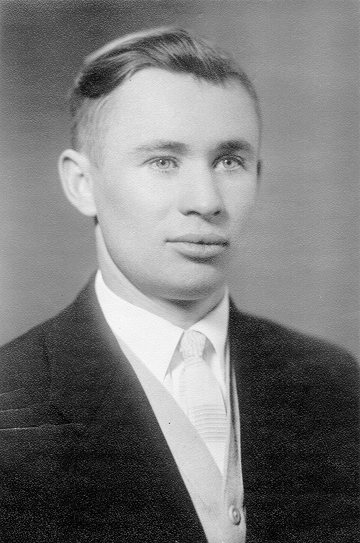
Valentin Bondarenko, 1961. Photo: Moscow Main Archive, CC BY 4.0 March 23, 1961
Valentin Bondarenko
Soviet cosmonaut trainee, age 24
Died in a fire during a pressure-chamber endurance test three weeks before Gagarin flew. His death was kept secret for twenty-five years, so nobody outside the program could learn from it. The oxygen-rich cabin that killed him would kill three more men in Florida six years later.
What it cost: His life, and the lesson that could have saved others if anyone had been allowed to hear it.
Sources: Wikipedia · James Oberg, Uncovering Soviet Disasters (1988)
-
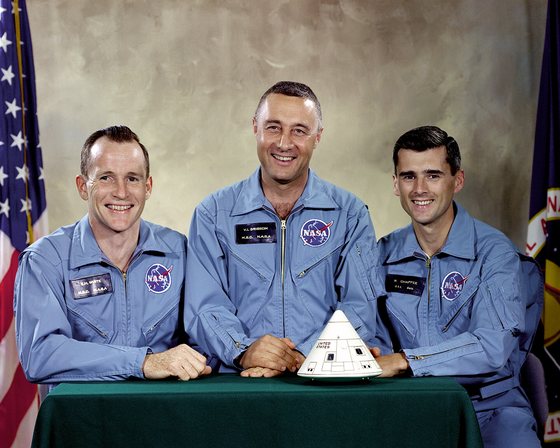
Ed White, Gus Grissom, and Roger Chaffee, 1966. Photo: NASA January 27, 1967
The crew of Apollo 1
Gus Grissom, Ed White, and Roger Chaffee
Killed by a fire in the command module during a launch-pad test, in a pure-oxygen cabin with a hatch that opened inward. The redesign that followed — the hatch, the wiring, the cabin atmosphere, the flammable materials stripped out — is the reason nine crews flew to the Moon and all of them came home.
What it cost: Three lives, on the ground, in a test that was not supposed to be dangerous.
Sources: Wikipedia · Report of the Apollo 204 Review Board, NASA, 1967
-
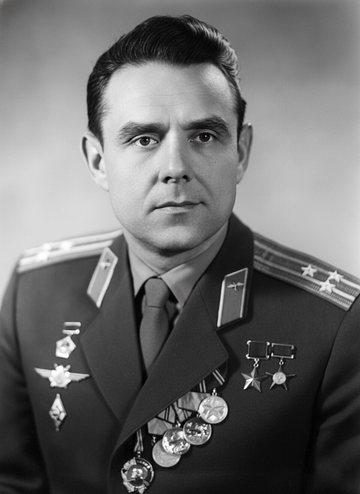
Vladimir Komarov. Photo: Moscow Main Archive, CC BY 4.0 April 24, 1967
Vladimir Komarov
Soyuz 1
Flew the first Soyuz knowing it had been rushed and had failed its uncrewed tests. In orbit a solar panel failed to open, then the attitude control, then the parachute. He came down alone. The Soyuz that flies today, still, is the one that was fixed because of him.
What it cost: His life, on a ship he knew was not ready.
Sources: Wikipedia · Asif Siddiqi, Challenge to Apollo, NASA SP-2000-4408
-
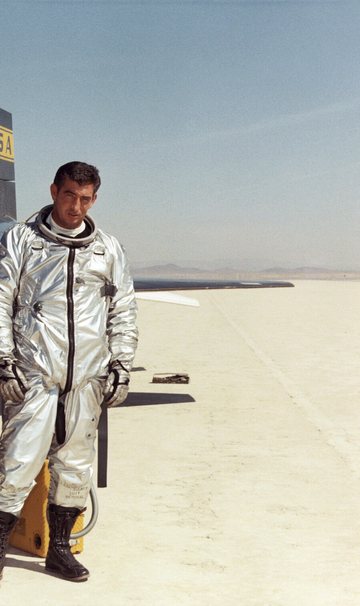
Mike Adams beside the X-15, Edwards, March 1967. Photo: NASA November 15, 1967
Michael J. Adams
X-15 Flight 191
Air Force test pilot, the eighth man to fly high enough to earn astronaut wings. Lost control during reentry from fifty miles up and the aircraft broke apart. The X-15 program that killed him is where most of what we know about flying a winged vehicle back from the edge of space was learned.
What it cost: His life, at the edge of the atmosphere, in a program that flew a hundred and ninety-nine times.
Sources: Wikipedia · Milton Thompson, At the Edge of Space: The X-15 Flight Program (1992)
-
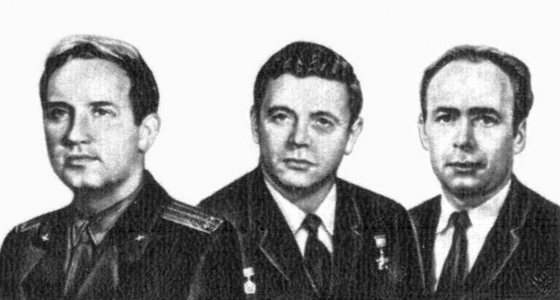
Dobrovolsky, Volkov, and Patsayev, from the 1971 Soviet memorial stamp. Public domain June 30, 1971
The crew of Soyuz 11
Georgy Dobrovolsky, Vladislav Volkov, and Viktor Patsayev
The first crew to live aboard a space station. They spent twenty-three days on Salyut 1 and undocked to come home. A valve opened during separation and the cabin lost its air in seconds. They were found in their seats, and they remain the only people to have died in space itself. Every crew since has worn a pressure suit for launch and landing because of them.
What it cost: Three lives, a minute from home, after doing everything right.
Sources: Wikipedia · Asif Siddiqi, Challenge to Apollo, NASA SP-2000-4408
-
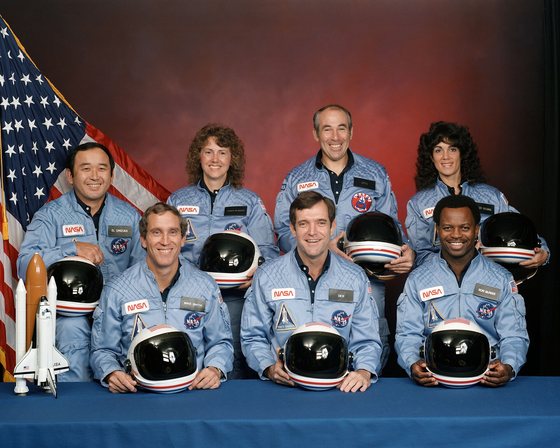
The STS-51-L crew, November 1985. Photo: NASA January 28, 1986
The crew of Challenger
Dick Scobee, Michael Smith, Ronald McNair, Ellison Onizuka, Judith Resnik, Gregory Jarvis, and Christa McAuliffe
Seventy-three seconds after launch on a cold morning, a solid rocket booster seal that engineers had warned about gave way. A schoolteacher was aboard, and millions of children were watching. The investigation that followed is the reason every engineer who has ever said “we should not fly today” has a case to point to.
What it cost: Seven lives, and a warning that was heard but not listened to.
Sources: Wikipedia · Report of the Presidential Commission on the Space Shuttle Challenger Accident, 1986
-
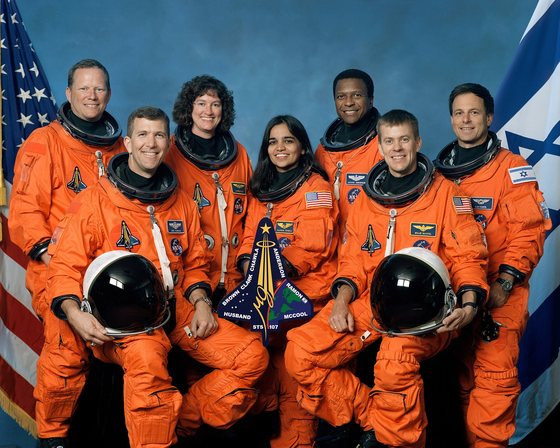
The STS-107 crew, 2001. Photo: NASA February 1, 2003
The crew of Columbia
Rick Husband, William McCool, Michael Anderson, David Brown, Kalpana Chawla, Laurel Clark, and Ilan Ramon
A piece of foam broke off the tank at launch and punched a hole in the wing that nobody on the ground was able to see. Sixteen days later, coming home, the wing came apart over Texas. They had flown a good mission and were minutes from landing.
What it cost: Seven lives, and the end of the Shuttle as a program that could pretend it was routine.
Sources: Wikipedia · Columbia Accident Investigation Board Report, Vol. I, 2003
The ones who saw it first
Visionaries are a separate kind of pioneer. They saw a thing that did not exist, knew it had to, and spent their lives and their money getting there while they were laughed at for it. Most of them did not live to see it done.
-
1857–1935
Konstantin Tsiolkovsky
Schoolteacher, Kaluga, Russia
Nearly deaf, self-taught, working in a provincial schoolhouse, he wrote the rocket equation in 1903 — before anybody had flown an airplane — and then worked out multistage rockets, liquid fuel, orbital stations, and airlocks on paper, for nobody, because nobody was asking. “Earth is the cradle of humanity, but one cannot live in the cradle forever.” He never saw a rocket fly.
What it cost: A lifetime of work with no audience and no proof he would ever be right.
Sources: Wikipedia · Tsiolkovsky, The Exploration of Cosmic Space by Means of Reaction Devices (1903)
-
1882–1945
Robert Goddard
Physicist, Worcester, Massachusetts
Flew the first liquid-fuel rocket from his aunt's farm in 1926. The New York Times mocked him in print for not knowing that rockets could not work in a vacuum, and he spent the rest of his life working mostly alone in the New Mexico desert on money from Charles Lindbergh and the Guggenheims. The Times printed a correction in 1969, the day after Apollo 11 launched.
What it cost: Twenty years of public ridicule for being right.
Sources: Wikipedia · Goddard, A Method of Reaching Extreme Altitudes, Smithsonian, 1919
-
1894–1989
Hermann Oberth
Physicist, Transylvania and Germany
His doctoral thesis on rockets was rejected as fantasy, so he published it himself in 1923. That book is what a teenage Wernher von Braun read, and what the German rocket clubs of the twenties were built around. He lived to watch the Moon landing on television, in the front row at the Cape.
What it cost: A rejected thesis and a career spent being the man the universities would not take seriously.
Sources: Wikipedia · Oberth, Die Rakete zu den Planetenräumen (1923)
-
1907–1966
Sergei Korolev
Chief Designer of the Soviet space program
Arrested in the purges of 1938, beaten, and sent to a Siberian gold mine, where he lost his teeth and nearly his life. Released to design rockets, he put the first satellite, the first animal, the first man, and the first woman into orbit, and his name was a state secret until the day he died. The Soviet Union announced who he was in his obituary.
What it cost: Six years in the camps, then a lifetime of the world's greatest accomplishments credited to nobody.
Sources: Wikipedia · James Harford, Korolev (1997)
-
1912–1977
Wernher von Braun
Rocket engineer, Germany and the United States
Built the V-2 for Hitler and the Saturn V for Kennedy, and the second does not cancel the first. He is on this list because the rocket that carried people to the Moon exists because he spent forty years wanting to build it, drawing it for magazine readers in the fifties when nobody in government was interested, and then delivering it on time.
What it cost: A lifetime of arguing for a destination, and a legacy that will always carry an asterisk.
Sources: Wikipedia · Michael Neufeld, Von Braun: Dreamer of Space, Engineer of War (2007)
-
1927–1992
Gerard K. O'Neill
Princeton physicist
Asked his students in 1969 whether a planet's surface was really the right place for an expanding civilization, and worked out the answer: no. The rotating habitats, the mass drivers, the lunar materials, the sunlight-powered economy in free space — the whole framework this magazine works inside — is his. He spent the last twenty years of his life trying to get anyone in power to listen.
What it cost: Two decades and his reputation as a serious physicist, spent on a future that has still not been funded.
Sources: Wikipedia · O’Neill, The High Frontier (1976)
-
1934–1996
Carl Sagan
Astronomer, Cornell
Led the small group that decided, in a matter of months in 1977, what to say to anyone who might one day find a spacecraft from Earth, and put two gold records on the Voyagers that are now farther from home than anything else people have made. He spent the rest of his life explaining the universe to people who had been told it was not for them.
What it cost: The respect of colleagues who thought a scientist should not be on television. He did it anyway.
A Message in a Bottle, Thrown Hard →
Sources: Wikipedia · Sagan, Pale Blue Dot (1994)
-
Biosphere 2, 1984–1994
Ed Bass
Texas financier and philanthropist
Put up on the order of a hundred and fifty million dollars of his own money to build a sealed world nobody had built before, on a schedule no government program would have approved, for a return of nothing but knowledge. The facility is still doing science that cannot be done anywhere else.
What it cost: His own money, and a decade as the punchline for a project that turned out to be foundation.
Sources: Wikipedia · Rebecca Reider, Dreaming the Biosphere (2009)
-
SpaceX, founded 2002
Elon Musk
Founder of SpaceX
Started a rocket company when the received wisdom was that private companies do not build orbital launchers. Three failures in a row nearly ended it; the fourth flight reached orbit in 2008 with the last of the money. The company then made the first stage of an orbital rocket land itself and fly again, and the price of getting a kilogram to orbit dropped further than it had in the previous forty years put together. He has said in public, for twenty years, that the point is Mars. Every plan in this magazine that involves launching something is cheaper because of him.
What it cost: Nearly all of the money he had, put in when everyone told him not to, and a life spent being told the goal is ridiculous.
A Message in a Bottle, Thrown Hard →
Sources: Wikipedia · Eric Berger, Liftoff: Elon Musk and the Desperate Early Days That Launched SpaceX (2021)
The ones who went
The ones who got in the seat when nobody knew if it worked. We cannot name everybody who has flown, and there are more than six hundred now. These are some of the ones who went first into a question with no answer yet.
-
April 12, 1961
Yuri Gagarin
Vostok 1
The first human being to leave the planet, one orbit, one hundred and eight minutes, in a capsule he could not steer, ejecting to land by parachute because the ship could not land softly with a man in it. Nobody knew whether a person could think, or swallow, or survive in orbit. He found out.
What it cost: He went first, into a question with no answer yet.
Sources: Wikipedia · Gagarin, Road to the Stars (1961)
-
May 5, 1961
Alan Shepard
Freedom 7
Sat on top of a Redstone for four hours of holds and finally said “let's light this candle.” Fifteen minutes, a hundred and sixteen miles up. Grounded for years by an inner-ear disease, had it fixed, and walked on the Moon at forty-seven on Apollo 14.
What it cost: A decade fighting to get back in the seat.
Sources: Wikipedia · Shepard and Slayton, Moon Shot (1994)
-
February 20, 1962
John Glenn
Friendship 7
First American in orbit, three times around, with a false warning light telling the ground his heat shield was loose. Flew again at seventy-seven on the Shuttle, the oldest person to go to space, so doctors could study what it does to an old man's body.
What it cost: Two rides, thirty-six years apart, both of them for the data.
Sources: Wikipedia · Glenn, John Glenn: A Memoir (1999)
-
1961–1963
The Mercury Seven
Six flights, one man each, and the one who never got to go
Seven military test pilots picked in 1959 to sit on top of a converted missile and find out whether a man could work in space at all. All seven are gone now. The ones marked † are gone; the year is when we lost them.
- Freedom 7 May 1961 — Alan Shepard † 1998. fifteen minutes, the first American in space.
- Liberty Bell 7 July 1961 — Gus Grissom † 1967. the hatch blew and the capsule sank; he did not.
- Friendship 7 February 1962 — John Glenn † 2016. first American in orbit, three times around.
- Aurora 7 May 1962 — Scott Carpenter † 2013. overshot the landing by 250 miles and floated for three hours.
- Sigma 7 October 1962 — Wally Schirra † 2007. the textbook flight, six orbits.
- Faith 9 May 1963 — Gordon Cooper † 2004. thirty-four hours, and flew the reentry by hand when the electrics failed.
- Grounded 1962 — Deke Slayton † 1993. pulled off Mercury for a heart murmur, ran the astronaut office for a decade, finally flew in 1975.
What it cost: Riding rockets that were blowing up on the pad the year before, with nothing between them and the outcome but a hand controller.
Sources: Wikipedia, Mercury Seven · Wolfe, The Right Stuff (1979) · Swenson, Grimwood, and Alexander, This New Ocean, NASA SP-4201
-
June 16, 1963
Valentina Tereshkova
Vostok 6
A textile worker and amateur parachutist, chosen from four hundred applicants, she flew forty-eight orbits alone — more time in space than every American astronaut to that point put together. The next woman would not fly for nineteen years.
What it cost: Three days alone in orbit, then two decades of being the only one.
Sources: Wikipedia · Bettyann Kevles, Almost Heaven: The Story of Women in Space (2003)
-
March 18, 1965
Alexei Leonov
Voskhod 2
First person to step outside a spacecraft. His suit ballooned in the vacuum until he could not fit back through the airlock, and he bled air out of it by hand, nearly blacking out, to get home. He later commanded the Soviet half of Apollo-Soyuz and painted what he had seen for the rest of his life.
What it cost: Twelve minutes outside, and the ten of them spent deciding whether he would get back in.
Sources: Wikipedia · Leonov and Scott, Two Sides of the Moon (2004)
-
1965–1966
The sixteen who flew Gemini
Ten flights in twenty months, and everything Apollo needed to know
Gemini is the program nobody remembers, and it is where rendezvous, docking, spacewalking, and two-week endurance were all worked out. Most of these men flew again on Apollo. Fourteen of the sixteen have died. The ones marked † are gone; the year is when we lost them.
- Gemini 3 March 1965 — Gus Grissom † 1967, John Young † 2018. first two-man flight.
- Gemini 4 June 1965 — Jim McDivitt † 2022, Ed White † 1967. first American spacewalk.
- Gemini 5 August 1965 — Gordon Cooper † 2004, Pete Conrad † 1999. eight days, long enough for the Moon.
- Gemini 7 December 1965 — Frank Borman † 2023, Jim Lovell † 2025. fourteen days in a space the size of a phone booth.
- Gemini 6A December 1965 — Wally Schirra † 2007, Tom Stafford † 2024. first rendezvous, to within a foot of Gemini 7.
- Gemini 8 March 1966 — Neil Armstrong † 2012, Dave Scott. first docking, then a stuck thruster and a tumble that nearly killed them.
- Gemini 9A June 1966 — Tom Stafford † 2024, Gene Cernan † 2017. flown by the backup crew after Elliot See and Charles Bassett died in a T-38 crash on the way to the factory.
- Gemini 10 July 1966 — John Young † 2018, Michael Collins † 2021. two dockings, two spacewalks.
- Gemini 11 September 1966 — Pete Conrad † 1999, Dick Gordon † 2017. docked on the first orbit, highest anyone had flown.
- Gemini 12 November 1966 — Jim Lovell † 2025, Buzz Aldrin. Aldrin finally showed a spacewalk could be done without exhausting the man.
What it cost: Two of the men assigned to these flights, See and Bassett, never got to fly them. Four astronauts of this era died in training jets: Theodore Freeman in 1964, See and Bassett in 1966, and Clifton Williams in 1967.
Sources: Wikipedia, Project Gemini · Hacker and Grimwood, On the Shoulders of Titans, NASA SP-4203
-
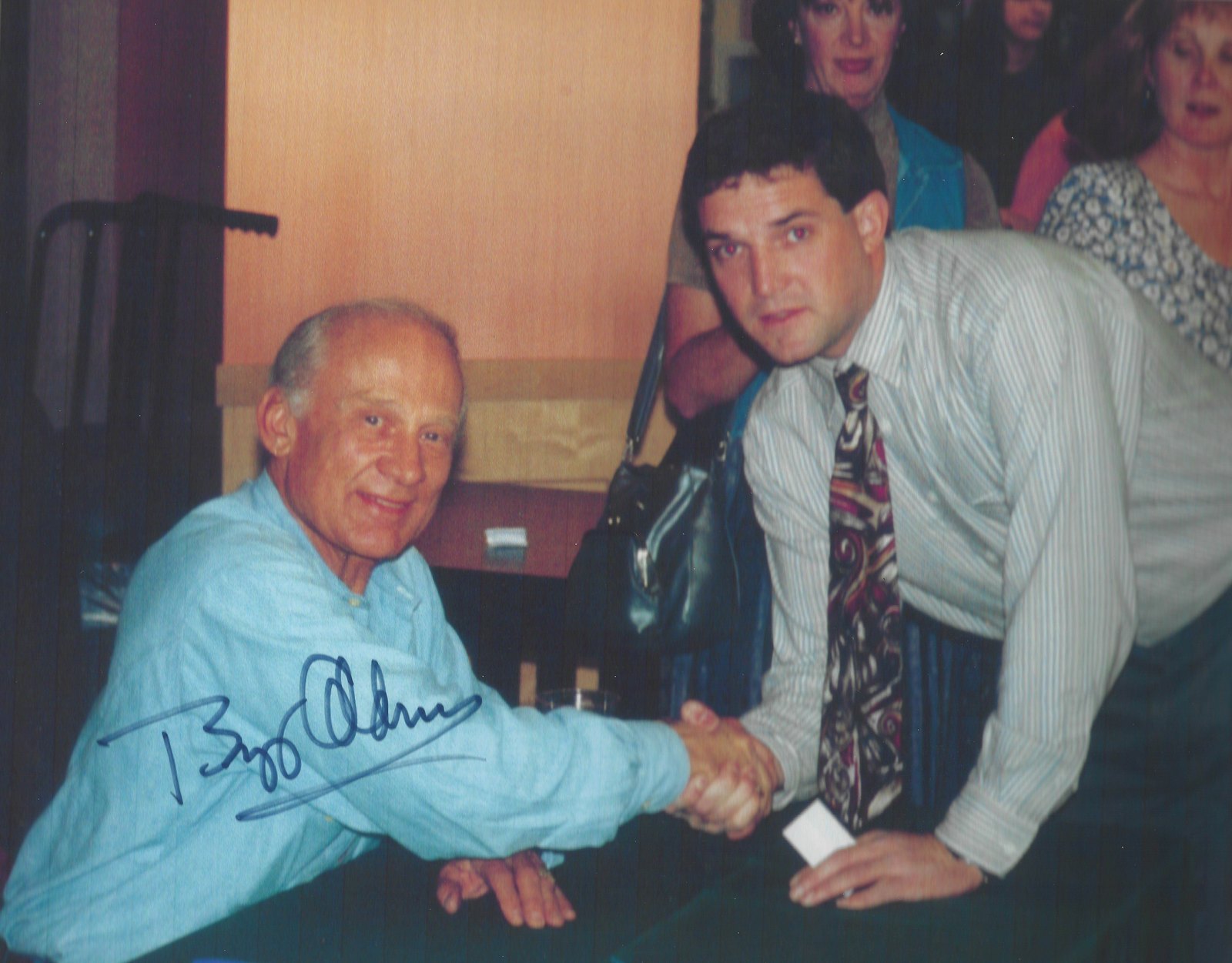
Buzz Aldrin with the editor, Seattle, 1996. Editor's photograph. Aldrin signed a copy of Encounter with Tiber that day; the magazine still has it. July 20, 1969
The crew of Apollo 11
Neil Armstrong, Buzz Aldrin, and Michael Collins
Went to the Moon with a computer that overloaded on the way down and a landing site full of boulders, and landed with about twenty seconds of fuel. Collins circled alone on the far side, out of contact with everyone alive, and later said he did not feel lonely. The three of them came home to a world that has never quite been the same size since.
What it cost: The odds Armstrong gave the landing: fifty-fifty. They went anyway.
Sources: Wikipedia · Aldrin, Magnificent Desolation (2009) · my own account: The Question I Asked Buzz Aldrin
-
1968–1972
The twenty-nine who flew Apollo
Eleven crews, twenty-four of them to the Moon, twelve of them onto it
Every one of them belongs on this page, not just the three whose names everybody knows. Twenty-four men have left Earth orbit and gone to the Moon; every one of them was on one of these crews. Twenty-three of the twenty-nine have died. The ones marked † are gone; the year is when we lost them.
- Apollo 7 October 1968 — Wally Schirra † 2007, Donn Eisele † 1987, Walter Cunningham † 2023. Earth orbit, the first flight after the fire.
- Apollo 8 December 1968 — Frank Borman † 2023, Jim Lovell † 2025, Bill Anders † 2024. first humans to leave Earth orbit and circle the Moon.
- Apollo 9 March 1969 — Jim McDivitt † 2022, Dave Scott, Rusty Schweickart. first flight of the lunar module, Earth orbit.
- Apollo 10 May 1969 — Tom Stafford † 2024, John Young † 2018, Gene Cernan † 2017. the dress rehearsal, to within nine miles of the surface.
- Apollo 11 July 1969 — Neil Armstrong † 2012, Michael Collins † 2021, Buzz Aldrin. first landing.
- Apollo 12 November 1969 — Pete Conrad † 1999, Dick Gordon † 2017, Alan Bean † 2018. landed next to Surveyor 3.
- Apollo 13 April 1970 — Jim Lovell † 2025, Jack Swigert † 1982, Fred Haise. the one that came home.
- Apollo 14 February 1971 — Alan Shepard † 1998, Stuart Roosa † 1994, Edgar Mitchell † 2016. Fra Mauro.
- Apollo 15 August 1971 — Dave Scott, Al Worden † 2020, Jim Irwin † 1991. first rover, Hadley Rille.
- Apollo 16 April 1972 — John Young † 2018, Ken Mattingly † 2023, Charlie Duke. the lunar highlands.
- Apollo 17 December 1972 — Gene Cernan † 2017, Ron Evans † 1990, Harrison Schmitt. the last landing, and the only geologist.
What it cost: Years of their lives in simulators and quarantine, a program that killed three of their friends before it flew, and for most of them, the rest of their lives being asked about eight days.
Sources: Wikipedia, List of Apollo astronauts · Chaikin, A Man on the Moon (1994)
-
September 26, 1991 – September 26, 1993
The Biosphere 2 crew
Abigail Alling, Linda Leigh, Taber MacCallum, Mark Nelson, Jane Poynter, Sally Silverstone, Mark Van Thillo, and Roy Walford
Eight people walked into three acres of glass in the Arizona desert, closed the door, and stayed two years. They grew about eighty percent of what they ate and were hungry for all of it. For sixteen months they breathed air thinner than a mountaintop's while the oxygen drained into the building's own concrete. They came out the same door on the day they said they would. Everything anybody now knows about keeping people alive in a sealed world starts with what they went through.
What it cost: Two years of their lives, ten to twenty percent of their body weight, and friendships that in some cases never came back.
Sources: Wikipedia · Jane Poynter, The Human Experiment (2006) · The Box Nobody Tested
The ones who never left the ground
For every person who flew there were ten thousand who did not, and the flight does not happen without them. The mathematicians, the programmers, the controllers, the seamstresses.
-
1918–2020
Katherine Johnson
Mathematician, NASA Langley
Calculated the trajectory for Shepard's flight by hand, and when the first computers came in, John Glenn refused to fly until she had personally checked their numbers. She did the math for Apollo 11's landing and for getting Apollo 13 home, in a building where she was not, for years, allowed to use the same restroom as the engineers.
What it cost: A career of doing the work while the credit went to the building.
Sources: Wikipedia · Margot Lee Shetterly, Hidden Figures (2016)
-
Apollo, 1960s
Margaret Hamilton
Director of software engineering, MIT Instrumentation Laboratory
Led the team that wrote the flight software for the Apollo guidance computer. Her insistence on error handling that engineers thought unnecessary is why the computer, overloaded three minutes before the first Moon landing, threw out the low-priority work and kept flying instead of crashing. There was no such thing as software engineering when she started. She named it.
What it cost: Years of being told the failures she was designing for would never happen.
Sources: Wikipedia · David Mindell, Digital Apollo (2008)
-
Mercury through Shuttle
Gene Kranz and the flight controllers
Mission Control, Houston
The people in the windowless room with the headsets, who wrote the mission rules, ran the simulations until the crews hated them, and brought Apollo 13 home with a slide rule and a stack of procedures nobody had ever needed before. Kranz's rule after the Apollo 1 fire: from now on we are tough and competent, and we will never again be careless.
What it cost: Every mission, every shift, the weight of being the one who says go.
Sources: Wikipedia · Kranz, Failure Is Not an Option (2000)
-
Apollo, 1960s
The seamstresses of ILC Dover
Frederica, Delaware
The Apollo spacesuit was twenty-one layers, hand-sewn to a tolerance of a sixty-fourth of an inch, by women who had been making bras and girdles for Playtex. There was no needle-through-the-fabric allowed — a single wrong stitch could kill a man on the Moon — and they did it, for every suit, for every crew, and not one suit ever failed.
What it cost: Years of precision work for people whose names were never on the suits.
Sources: Wikipedia · Nicholas de Monchaux, Spacesuit: Fashioning Apollo (2011)
Know someone who belongs here? Write to hello@starboundmagazine.com and tell us what it cost them.